
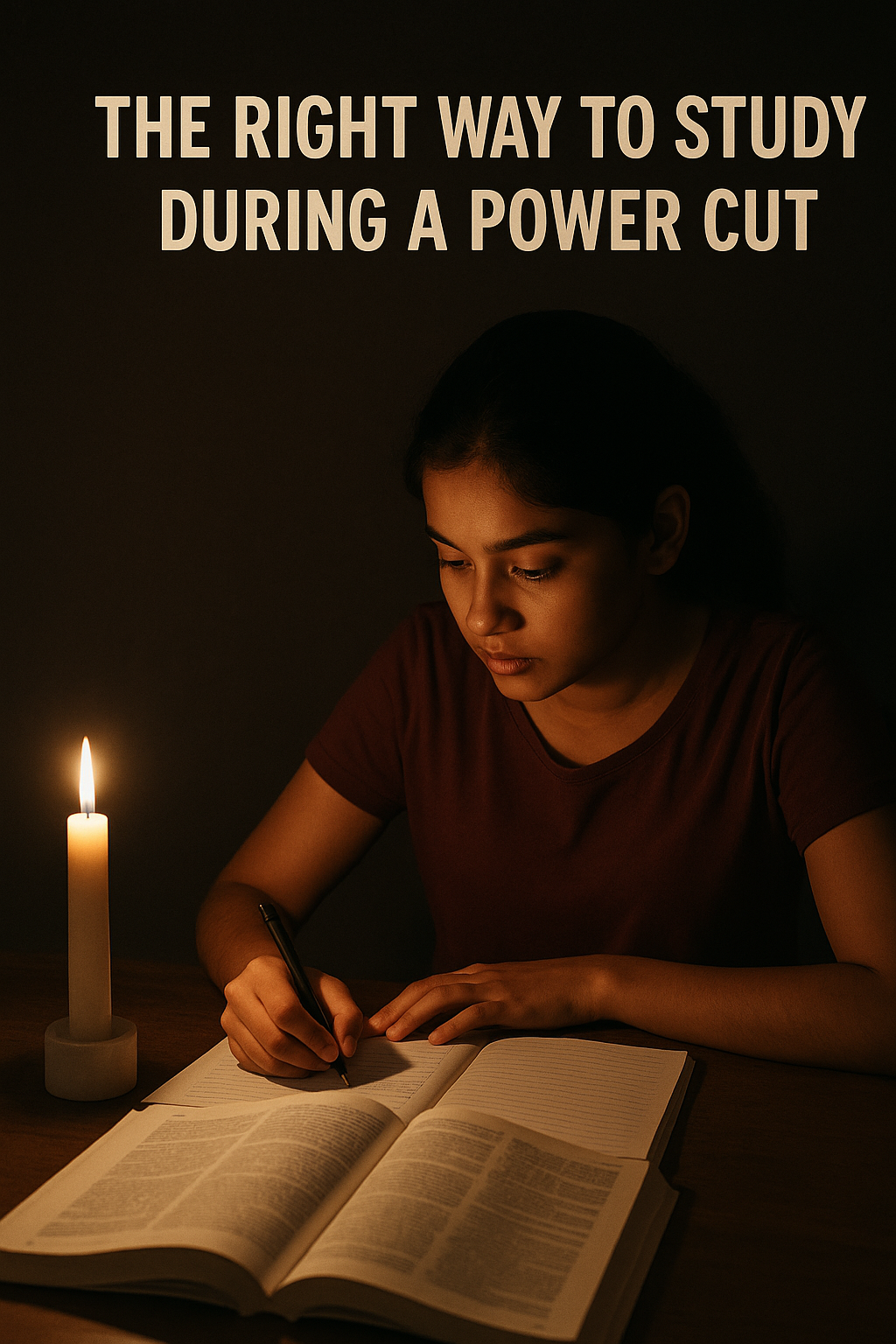
Power cuts can be highly disruptive, especially when you’re trying to focus on your studies. Whether you’re a school student, college-goer, or someone preparing for competitive exams, a sudden blackout can throw off your concentration. But with the right mindset and strategies, you can still study effectively even during a power outage.

In this blog, we will explore practical, simple, and efficient ways to study during a power cut, without letting darkness dim your academic progress.
1. Use Natural Light Wisely
One of the most obvious yet overlooked solutions during a daytime power cut is to use natural light. Shift your study spot to a room with large windows or an open balcony. If possible, sit facing the light to avoid casting shadows on your books.
Tips:
- Keep your curtains or blinds open during the day.
- Rearrange your furniture in advance so that a desk or chair is near a well-lit window.
- Avoid straining your eyes by making sure the sunlight directly illuminates your books or notes.
2. Invest in Emergency Lighting
If your area frequently experiences power outages, it’s wise to invest in battery-operated study lamps, LED lanterns, or rechargeable lights. These are energy-efficient and provide adequate brightness without being harsh on the eyes.
Popular Options:
- Solar-powered lamps (eco-friendly and cost-effective)
- LED desk lights with adjustable brightness
- Headlamps for hands-free study
Keep your lights charged at all times and store them in easily accessible locations.
3. Switch to Offline Study Materials
During a power cut, internet routers and laptops might stop working, making online classes or digital study hard to access. Prepare for this by having offline resources like textbooks, printed notes, and physical flashcards.
Preparation Tips:
- Download important documents or notes beforehand.
- Keep a dedicated binder for offline revision.
- Print important diagrams or maps if you study science or geography.
Having non-digital resources not only helps during power cuts but also reduces screen time.
4. Use Mobile Devices Carefully
If your phone is charged, you can use it as a temporary light source or to access downloaded lessons and PDFS. But use it cautiously to preserve battery.
Tips to Save Battery:
- Lower screen brightness.
- Turn off Wi-Fi and Bluetooth if not in use.
- Use “reading mode” or offline e-book apps like Kindle.
Apps to Consider:
- Evernote (for offline note access)
- Moon+ Reader (for eBooks)
- Google Keep (syncs notes offline)
5. Practice Mind-Based Study Techniques
When electronic devices and even lights fail, your brain becomes your biggest resource. Use this time to test your memory and build mental endurance.
Effective Techniques:
- Mind Mapping: Draw visual connections between topics.
- Recitation: Speak out loud what you’ve learned to reinforce memory.
- Self-Quizzing: Close your book and try to recall key points.
- Mnemonics: Create memory aids for formulas, dates, or terms.
These techniques enhance long-term retention and make your study session more productive—even in the dark.
6. Stick to a Study Schedule
Power cuts are usually unpredictable, but your study habits don’t have to be. Create a flexible timetable that accounts for interruptions.
Tips:
- Designate daylight hours for subjects requiring more reading.
- Save mental exercises or oral revision for night-time power cuts.
- Break your schedule into short 30-45 minute sessions to maintain focus.
A consistent routine helps reduce the stress of unexpected power outages and ensures steady progress.
7. Keep Study Tools Organised
When the lights go out, searching for your notebook or pen in the dark can waste time and add frustration. Prepare a “study essentials kit” in advance.
What to Include:
- Notebooks, pens, highlighters
- Flashlight or emergency lamp
- Sticky notes for reminders
- A bottle of water and a healthy snack
Place this kit in your study area so it’s always within reach.
8. Make Use of Audio Learning
When visual study isn’t feasible due to darkness or low lighting, switch to audio-based learning. Podcasts, recorded lectures, and educational audiobooks can be very useful.
Platforms to Explore:
- Spotify or Apple Podcasts (for educational channels)
- Audible or Storyteller (for audiobooks)
- YouTube (download audio lectures in advance)
Use headphones to avoid disturbing others and stay focused.
9. Take Advantage of Quiet Time
Power cuts usually bring down neighborhood noise, especially if fans, TVS, and other machines stop running. This silence can be a blessing in disguise.
Use this peaceful atmosphere to do deep work or tackle difficult topics that require more concentration. If it’s dark, lie down and mentally review what you’ve learned—this technique is also effective for memory reinforcement.
10. Stay Positive and Adapt
Frustration is common during a blackout, but getting anxious won’t help. Instead, focus on what you can do. Sometimes these small interruptions help break monotony and can even enhance creativity and self-discipline.
Stay calm, hydrated, and use the time to reflect or plan your next study session. The goal is not perfection, but consistent progress—even when circumstances are not ideal.
Conclusion
Studying during a power cut may seem difficult, but it is doable with the right preparation and mindset. By making use of natural light, offline resources, audio tools, and memory-based techniques, you can keep learning even in the dark.
Remember, every challenge is an opportunity in disguise. The next time the power goes out, you’ll know exactly how to keep the light of learning alive.
The Best Approach to Make a Resume
References:
1. Harvard Health Publishing – Blue light has a dark side
2. U.S. Department of Energy – Portable Lighting Guide
3. Android Authority – Save battery life tips
4. Greater Good Magazine – UC Berkeley – Memory Techniques
5. EdTech Magazine – The Rise of Podcast Learning